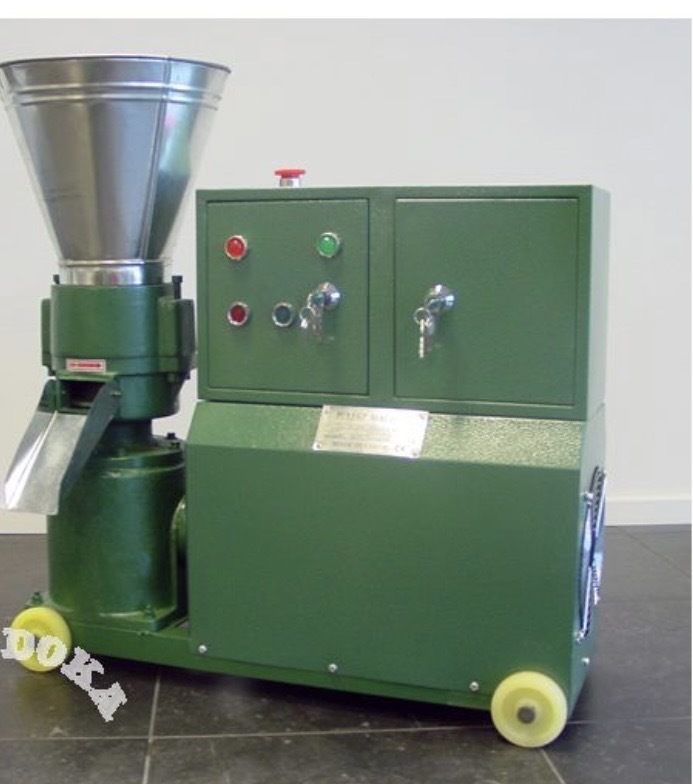
We now aim to raise €3,500 - €5,000 to cover transportation costs from the Netherlands to Niger (by air or sea). Every contribution brings us closer to launching Niger’s first granulated compost production. Granulated compost improves nutrient absorption and water retention in soil, and enables larger-scale distribution to farmers across the country.
With this, AWV will also be able to increase production capacity and help us move from trial stage to full agricultural impact on a national level, creating sustainable job employment and reduce a significant part of the household waste streams: a game-changer for the country and for AWV itself.
Visit our main crowdfunding page: Waste to Value Niger | Associação Waste to Value (Powered by Donorbox), support and / or share our initiative through your networks!

As we enter 2026, we are incredibly grateful for the early support that is helping us kickstart the next phase of our program: turning organic waste into value through sustainable composting solutions.
Thanks to your contributions, we are getting closer to:
Your continued support can help us reach our full goal of €25,000.
Click here for our Donorbox page or on the donate button on the website!:
Waste to Value Niger | Associação Waste to Value (Powered by Donorbox)
Every donation helps us grow our impact across Niger and beyond.
Thank you!
AWV has been working tirelessly in Niger this year to transform waste into value. Now, we are approaching an exciting new phase within the Waste to Value program, to seriously scale up our activities.
With your support, we will:
✅ Purchase and transport two compost granulators to Niamey – a first for the country
✅ Expand our composting teams and training
✅ Provide protective gear and continue to manage compost cycles
✅ Scale up compost production to reduce waste, restore soil, and create thousands of jobs
Every Euro, Dollar, or Franc makes a difference. Click below on the link, or on the link on our site itself, and donate!
👉 Waste to Value Niger | Associação Waste to Value (Powered by Donorbox)
Watch our short film on our socials and see how your donation creates direct impact.
🔗 AWV - Associaçao Waste to Value (@awv_waste_value) / X
🔗AWV associacao waste to value (@awv.waste.to.value) | TikTok
🔗AWV - Associacao Waste to Value (@awv_associacao_waste_to_value) • Instagram photos and videos
🔗https://www.linkedin.com/company/awv-associacao-waste-to-value
Help us spread the word, to reach a maximum amount of people.
Thank you for being part of the change!
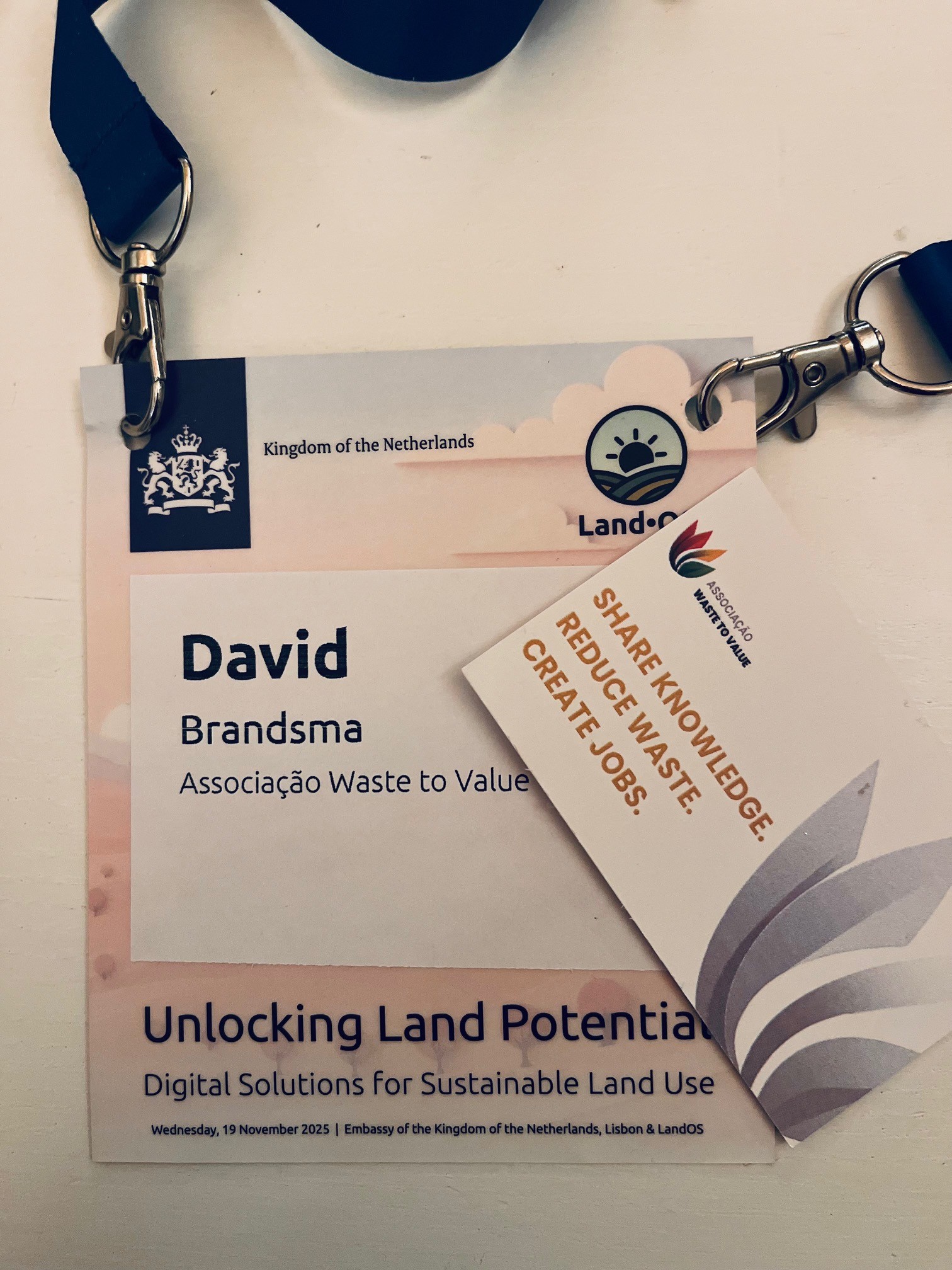
Great discussions with many stakeholders and experts, who came together to discuss the challenges and opportunities of sustainable land management in Portugal.
As AWV prepares to expand its activities to Portugal next year, we aim to introduce innovative methods that can significantly help small farmers and landowners, by transforming waste into value.
A warm thank-you to the Dutch Embassy for organizing this important event and fostering meaningful dialogue on sustainability, innovation, and circular solutions.
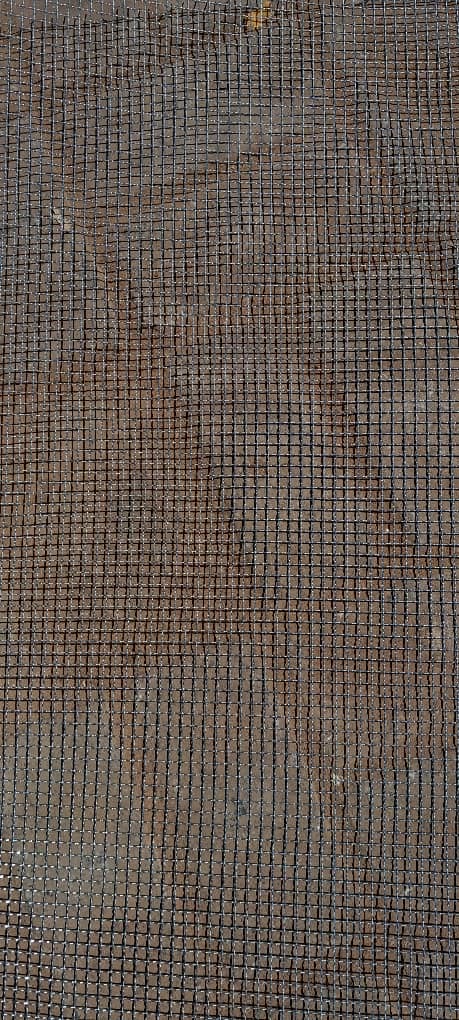
This marks the start of the first composting period of the year. Our teams are now preparing to pile and process organic materials to begin full-scale composting. This phase will also allow us to expand the trial field for future application.
Each composting cycle lasts four months and involves dozens of local workers responsible for both waste collection and compost management. The sieves are essential for filtering raw materials at the start of the process, helping to improve compost quality.
Our next major step (and challenge) is to acquire and transport granulators (or pellet presses) to Niger.
Why granulators? They convert compost into granulated form, making it easier to store, transport, and apply, particularly useful in dry regions. It would be the first time in Niger that compost is presented in granulated form, already a major innovation!
Granulated compost improves nutrient absorption and water retention in soil, and enables larger-scale distribution to farmers across the country.
This equipment will significantly increase production capacity and help us move from trial stage to full agricultural impact on a national level. Keep a close eye out for updates and our soon to be launched crowdfunding campaign!
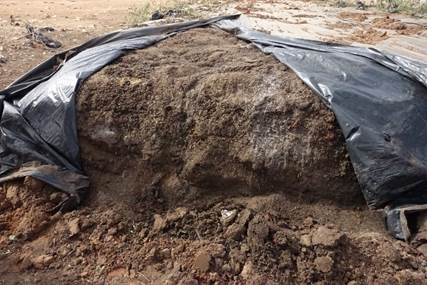
We began by visiting several potential composting sites in Niamey. Two of them stood out:
All sites have the potential to become compost production hubs for the city. AWV is currently working to have a site cleared to expand on our work, thanks to our local partner, the NGO AS-TER SOUDJI Niger.
The process is simple but powerful:
This will be the first time in Niger that compost is presented in granulated form, similar to chemical fertilizers, which in itself is already a major innovation. This still requires investments in a high-quality granulator to speed up the process and its production, for which AWV will soon launch a crowd-funding campaign!
Part of the compost will be distributed free of charge to show its impact on key crops like rice, onions, cabbage, and lettuce. Seeing healthy crops grow is the most convincing argument for all parties involved.
We will work hand-in-hand with farmers, advisors, and local partners, including the Ministry of Agriculture, to make sure knowledge spreads and more people can benefit.
Composting isn’t just about farming. It involves collecting organic material, sorting, processing, packaging, and distribution. This means real work opportunities for young people, in service of their own communities.
As the program grows, we aim to contribute in building a national compost market that helps reduce reliance on imported fertilizers and strengthens local economies.
We believe in openness and collaboration. That’s why we’ll share updates in due time, during the entire process, on:
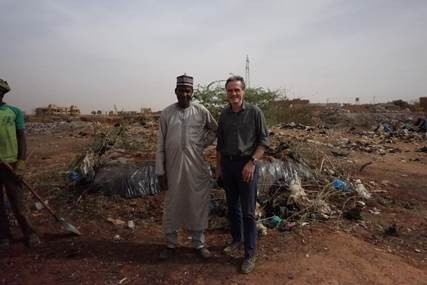
Across the country, farmers grow a variety of vegetables, such as onions, tomatoes, and cabbage on small plots that can bring real income to a family. Staple crops like millet and sorghum are planted over huge areas to feed communities. Rice is grown in irrigated zones and can be very productive when conditions are right.
But here’s the problem: the soil is losing its nutrients year after year. Even with good rains, farmers can’t get the yields they need. And when yields drop, families eat less, and food becomes more expensive.
Every three years, Niger faces a shortage in food production. In the past, major food crises have affected millions of people. The country still remembers the famines of 1956, 1974/75, 1994/95, 2004/05, and 2009/10, with the most recent crisis affecting over 5 million people. The Nigerien government is highly concerned about these recurring food crises.
The main reason behind this is poor soil fertility. Niger’s soils are some of the poorest in the world, lacking the nitrogen and phosphorus crops need to grow. Chemical fertilizers are imported, expensive, and out of reach for many small farmers.
The soils in Niger are largely very poor, often little more than bare sand (!). They lack carbon, mineral elements like phosphorus and potassium, and fertilizers such as nitrogen. This explains the critical need to use compost containing natural sources to rebuild and restore the soil's fertility. Compost, especially enriched compost, is one of the best alternatives to restore soil quality in Niger, because it is rich in nitrogen, phosphorus, potassium and humus.
Niger also generates around 2 million tons of household organic waste each year. Instead of this waste polluting the environment, it can become something valuable: compost, a natural fertilizer that restores soil health.
This is the idea behind AWV's “Waste to Value” Program: turning local waste into a sustainable fertilizer that is affordable for farmers, good for the environment, and creates jobs for young people.
What does this mean for Niger?:
This is why our work on the ground matters. Restoring the soil is not just an agricultural issue, it’s about food security, jobs, and a better future for millions of people.
We are entering a new phase at AWV, and soon, we will need your support.
We recently wrote an opinion article in Jornal Económico, titled “Transformar resíduos em valor: de África a Portugal”, explaining how our waste-to-value approach is transforming agriculture, one compost heap at a time:
Transformar resíduos em valor: de África a Portugal
For our Niger-program, we are preparing to launch a crowdfunding campaign to help finance operational costs for further advisory projects and ship a granulator (pellet press) that will allow us to produce compost in granulated form, a first of its kind for the country.
This new phase will drastically increase the volume of high-quality, nutrient-rich compost and unlock national-scale impact in the agricultural sector, particularly in dryland zones.
AWV is not a commercial venture. We aim to share knowledge, improve land use, and support local livelihoods. Once the systems are in place, we focus on education and training, for us to gradually step back.
For Portugal, we are currently developing a strategy focused on land management and fire prevention, building bridges between Europe and Sub-Saharan Africa.
Please read, share, and support this journey. Let’s turn waste into value, together.
At AWV, we are building a world where knowledge, resources, and a pragmatic approach come together to generate real and lasting change. Our platform connects skilled professionals with social and environmental projects that need their expertise and connects donors with transparent, high-impact initiatives.
But how exactly does this system work? What happens beyond? This post explains how AWV operates: from project recruitment to expert matching, donor engagement, and long-term follow-up.
1. How Are Projects and Experts Recruited?
At AWV, we focus on creating a trusted, qualified ecosystem of projects and professionals. This begins with careful recruitment for both elements, defining the feasibility and impact a project can generate when consulted by a qualified expert in waste management.
Project Recruitment
We currently work with NGOs, municipalities and local ministries to implement initiatives committed to sustainability, circular economy, and community resilience. Our focus is on education, reducing environmental damages and the creation of jobs through innovative waste management, for which all project hosts must:
Some of these organizations come to us directly; others are identified through our partnerships field networks and factfinding projects. We particularly seek to include small, medium and under-resourced initiatives that rarely have access to expert knowledge.
Expert Recruitment
Our waste experts will be professionals both active and retired. They emerge from diverse sectors, although strategic waste management will be the main focus of our work. We will recruit through calls for experts, institutional partnerships, and spontaneous applications.
Each expert is vetted based on:
Our goal is to maintain a dynamic expert pool that allows us to respond quickly and accurately when needed, to the needs of our partner projects.
2. How Is the Matching Process Organized?
At AWV, we do more than connect people: we build fit-for-purpose collaborations. Our matching process is guided by human dialogue, not algorithms.
Step 1: Needs Assessment
Once a project is accepted, we work closely with its leaders to understand the specific challenge or opportunity they face, aligned with the main goals of AWV: improve waste management systems and/or training a team, to restructuring a waste collection and transformation process on a greater scale.
Step 2: Expert Search and Dialogue
We search our database for the best-suited expert profiles and initiate contact. Compatibility is key! We consider professional alignment as well as personal values, cultural sensitivity, and working style. When a match is found, we facilitate an open dialogue between the project and our potential expert.
Step 3: Preparation and Planning
AWV coordinates the practical and technical aspects of collaboration: developing action plans, managing logistics, and preparing both parties for success. Depending on the nature of the engagement, the expert may work remotely, on-site, or through a hybrid model.
Step 4: Launch and Support
Once the work begins, we continue to accompany the process to ensure alignment, responsiveness, and quality. This personal support is what makes our model both reliable and impactful.
3. How Do Donors Engage with Projects?
We believe donors should be more than passive supporters: they should be actively involved in our process in creating positive and lasting change.
Choice and Transparency
As we plan to grow our work through the coming years, donors can explore real, verified projects seeking funding on our website. Each listing will include:
This allows donors to support causes they believe in: from the creation of jobs, reducing environmental damages, education, and community innovation.
Connection and Storytelling
We keep donors informed through updates, photos, testimonials, and impact reports. In many cases, donors will be invited to speak directly with the project team or expert involved. This level of human connection deepens the value of each contribution.
Institutional and Corporate Donors
For larger donors, including foundations and companies, we offer co-creation opportunities. These partnerships may include branding, employee engagement, or long-term investment in a specific region in which AWV has focused itself to be active.
4. AWV’s Role Beyond the Platform
AWV is not just a connector: we are a guide, a facilitator, and a quality assurance partner throughout the entire process.
Orientation and Capacity Building
Both projects and experts benefit from pre-engagement preparation. We ensure everyone is aligned in goals, roles, and expectations before any collaboration begins.
Support During the Project
During active projects, AWV stays closely involved. We provide assistance when unexpected challenges arise, and help or mediate if needed. This level of accompaniment leads to smoother collaboration and higher-quality results.
Monitoring, Evaluation, and Learning
Every AWV project includes a follow-up and evaluation phase. We track outputs (e.g., amount of tons of compost produced, people involved, jobs created), outcomes (e.g., improved knowledge, innovative thinking), and feedback from all parties. These insights help us refine our methods and demonstrate accountability to donors.
Long-Term Engagement
In many cases, our experts continue to mentor project teams beyond the official project. We encourage and support these long-term relationships and often help structure ongoing cooperation. As we will expand our growing network of experts and project partners, this creates new opportunities for knowledge sharing and innovation.
A Platform for Action, a Community for Change
AWV wants to cultivate a global community where skills, needs, and resources meet in service of sustainable transformation.
We invite you to be part of this movement:
Join us, and let’s build solutions together. Contact us through our contact form or send an email to contact@awv.pt
1. Advisory missions
AWV, after having established strong local networks, organizes short-term advisory projects, either for the sharing of technical expertise or to provide educational value on already existing programs with the aim to develop a long-term impact. AWV finances the international travel costs of the senior expert, and the local partner compensates the local expenses. Our policies are strict, the senior expert does not receive any kind of advisory fee.
2. Greater scope of replication
AWV sees its role expanding towards advising and educating partners on a thematic level (e.g., entrepreneurship, waste management) on an (inter)national scale.
3. Raising awareness of our work, establishing strong partnerships along the way
With our strategy, AWV believes that the sharing of knowledge is one of the cornerstones of our association. Therefore, we aim not only to introduce a sustainable economic initiative with its own advantages in reducing waste, the creation of jobs and contributing for a better environment. We also want to share our experiences and findings for full transparency. As we expand our activities, we aim to establish solid partnerships with both private and public stakeholders, with the goal to create strong 'tri-partite' agreements across the board.
Our goal is to prove that a large portion of household waste in Niamey can be successfully recycled. This initiative will lead to:
1. Improved Waste Collection
2. Employment for Vulnerable Groups
3. Transforming Waste into Valuable Products
The recycling process itself will generate income, making these jobs sustainable, using a circular approach.
Potential Large-Scale Impact
As we have proven in the past for this approach to work, we estimate that when this initiative is expanded across Niamey, the following opportunities will be created:
✅ 4,000 new jobs for unemployed youth and women.
✅ 150,000 tons of sand produced annually for construction and road repairs.
✅ 50,000 tons of compost per year, reducing the need for expensive imported fertilizers.
Nationwide Impact
If scaled across all of Niger, these benefits could increase fivefold, creating even more jobs and reducing environmental pollution significantly. Using a pragmatic step-by-step approach, we envision to implement this initiative among several countries in Africa, within the next five to ten years.
In the main capitals of Sub-Saharan Africa, there is still no structured waste collection and processing system. This poses at one hand a problem, because it leads to an increase of waste and further risks to public health.
However, on the other it leads to opportunity, because the improvement of a good waste collection, processing and recycling system can not only limit these health risks, but also create wealth and new jobs for urban residents in the field of waste collection and processing, particularly for young people and women.
The Waste Initiative wants to tackle the approach behind it and proposes a way to expand this approach to the whole of Sub-Saharan Africa, by connecting multiple partners and stakeholders and help coordinate an innovative business initiative which provides job opportunities in some of the poorest countries in the world.
Between 2015 and 2050 estimations are that the world population will grow from 7.3 to 9.7 billion people. Although the figures may vary from one estimate to another, a clear development can be detected: that the population growth occurs mostly in development countries, and countries with emerging economies.
The fast-growing urbanization in Africa, combined with a rapid general population growth, leads to poor urban management since resources to cope with this challenge are limited. The consequences are cities littered by smoking and growing heaps of garbage, creating serious environmental dangers and health risks.
Contributing to the problem, already young people are often unemployed. After leaving school, insufficient job offers cause a striking majority to remain job seekers or enter the informal economy. The challenges look daunting. However, the solutions to make a significant contribution to socio-economic growth by sharing knowledge and expertise from experts from abroad already exist.
We have implemented innovative solutions in the past which will prove to be the road to economic recovery for an entire sector through our initiative. In short, our approach works. The Waste Initiative exists to bundle the experiences and skills from experts specialized in waste management to tackle this issue with small flexible teams of specialists to create sustainable job opportunities.
The Waste Initiative considers SMEs as the backbone of sustainable economic development and as a catalyst for innovation, job creation and growth. SMEs not only generate economic profit, but also make an important contribution to solving social and development issues, such as poverty, insecure food supplies, gender inequality and deprivation. The Waste Initiative allows us to introduce practical solutions to solve the waste problem. The expected results will serve to boost sustainable socio-economic development and to serve as a catalyst for innovation, job creation and economic growth.
As AWV is Portugal-based, an internal look at the municipal waste recycling rates in Europe shows that Portugal is still following behind the average European standards. Despite great efforts being made in the last couple of years, AWV’s aim is to introduce several educational initiatives that highlight the importance of recycling and sustainable waste management, encouraging a culture of environmental responsibility.
We now aim to raise €3,500 - €5,000 to cover transportation costs from the Netherlands to Niger (by air or sea). Every contribution brings us closer to launching Niger’s first granulated compost production. Granulated compost improves nutrient absorption and water retention in soil, and enables larger-scale distribution to farmers across the country.
With this, AWV will also be able to increase production capacity and help us move from trial stage to full agricultural impact on a national level, creating sustainable job employment and reduce a significant part of the household waste streams: a game-changer for the country and for AWV itself.
Visit our main crowdfunding page: Waste to Value Niger | Associação Waste to Value (Powered by Donorbox), support and / or share our initiative through your networks!
As we enter 2026, we are incredibly grateful for the early support that is helping us kickstart the next phase of our program: turning organic waste into value through sustainable composting solutions.
Thanks to your contributions, we are getting closer to:
Your continued support can help us reach our full goal of €25,000.
Click here for our Donorbox page or on the donate button on the website!:
Waste to Value Niger | Associação Waste to Value (Powered by Donorbox)
Every donation helps us grow our impact across Niger and beyond.
Thank you!
AWV has been working tirelessly in Niger this year to transform waste into value. Now, we are approaching an exciting new phase within the Waste to Value program, to seriously scale up our activities.
With your support, we will:
✅ Purchase and transport two compost granulators to Niamey – a first for the country
✅ Expand our composting teams and training
✅ Provide protective gear and continue to manage compost cycles
✅ Scale up compost production to reduce waste, restore soil, and create thousands of jobs
Every Euro, Dollar, or Franc makes a difference. Click below on the link, or on the link on our site itself, and donate!
👉 Waste to Value Niger | Associação Waste to Value (Powered by Donorbox)
Watch our short film on our socials and see how your donation creates direct impact.
🔗 AWV - Associaçao Waste to Value (@awv_waste_value) / X
🔗AWV associacao waste to value (@awv.waste.to.value) | TikTok
🔗AWV - Associacao Waste to Value (@awv_associacao_waste_to_value) • Instagram photos and videos
🔗https://www.linkedin.com/company/awv-associacao-waste-to-value
Help us spread the word, to reach a maximum amount of people.
Thank you for being part of the change!
Great discussions with many stakeholders and experts, who came together to discuss the challenges and opportunities of sustainable land management in Portugal.
As AWV prepares to expand its activities to Portugal next year, we aim to introduce innovative methods that can significantly help small farmers and landowners, by transforming waste into value.
A warm thank-you to the Dutch Embassy for organizing this important event and fostering meaningful dialogue on sustainability, innovation, and circular solutions.
This marks the start of the first composting period of the year. Our teams are now preparing to pile and process organic materials to begin full-scale composting. This phase will also allow us to expand the trial field for future application.
Each composting cycle lasts four months and involves dozens of local workers responsible for both waste collection and compost management. The sieves are essential for filtering raw materials at the start of the process, helping to improve compost quality.
Our next major step (and challenge) is to acquire and transport granulators (or pellet presses) to Niger.
Why granulators? They convert compost into granulated form, making it easier to store, transport, and apply, particularly useful in dry regions. It would be the first time in Niger that compost is presented in granulated form, already a major innovation!
Granulated compost improves nutrient absorption and water retention in soil, and enables larger-scale distribution to farmers across the country.
This equipment will significantly increase production capacity and help us move from trial stage to full agricultural impact on a national level. Keep a close eye out for updates and our soon to be launched crowdfunding campaign!
We began by visiting several potential composting sites in Niamey. Two of them stood out:
All sites have the potential to become compost production hubs for the city. AWV is currently working to have a site cleared to expand on our work, thanks to our local partner, the NGO AS-TER SOUDJI Niger.
The process is simple but powerful:
This will be the first time in Niger that compost is presented in granulated form, similar to chemical fertilizers, which in itself is already a major innovation. This still requires investments in a high-quality granulator to speed up the process and its production, for which AWV will soon launch a crowd-funding campaign!
Part of the compost will be distributed free of charge to show its impact on key crops like rice, onions, cabbage, and lettuce. Seeing healthy crops grow is the most convincing argument for all parties involved.
We will work hand-in-hand with farmers, advisors, and local partners, including the Ministry of Agriculture, to make sure knowledge spreads and more people can benefit.
Composting isn’t just about farming. It involves collecting organic material, sorting, processing, packaging, and distribution. This means real work opportunities for young people, in service of their own communities.
As the program grows, we aim to contribute in building a national compost market that helps reduce reliance on imported fertilizers and strengthens local economies.
We believe in openness and collaboration. That’s why we’ll share updates in due time, during the entire process, on:
Across the country, farmers grow a variety of vegetables, such as onions, tomatoes, and cabbage on small plots that can bring real income to a family. Staple crops like millet and sorghum are planted over huge areas to feed communities. Rice is grown in irrigated zones and can be very productive when conditions are right.
But here’s the problem: the soil is losing its nutrients year after year. Even with good rains, farmers can’t get the yields they need. And when yields drop, families eat less, and food becomes more expensive.
Every three years, Niger faces a shortage in food production. In the past, major food crises have affected millions of people. The country still remembers the famines of 1956, 1974/75, 1994/95, 2004/05, and 2009/10, with the most recent crisis affecting over 5 million people. The Nigerien government is highly concerned about these recurring food crises.
The main reason behind this is poor soil fertility. Niger’s soils are some of the poorest in the world, lacking the nitrogen and phosphorus crops need to grow. Chemical fertilizers are imported, expensive, and out of reach for many small farmers.
The soils in Niger are largely very poor, often little more than bare sand (!). They lack carbon, mineral elements like phosphorus and potassium, and fertilizers such as nitrogen. This explains the critical need to use compost containing natural sources to rebuild and restore the soil's fertility. Compost, especially enriched compost, is one of the best alternatives to restore soil quality in Niger, because it is rich in nitrogen, phosphorus, potassium and humus.
Niger also generates around 2 million tons of household organic waste each year. Instead of this waste polluting the environment, it can become something valuable: compost, a natural fertilizer that restores soil health.
This is the idea behind AWV's “Waste to Value” Program: turning local waste into a sustainable fertilizer that is affordable for farmers, good for the environment, and creates jobs for young people.
What does this mean for Niger?:
This is why our work on the ground matters. Restoring the soil is not just an agricultural issue, it’s about food security, jobs, and a better future for millions of people.
We are entering a new phase at AWV, and soon, we will need your support.
We recently wrote an opinion article in Jornal Económico, titled “Transformar resíduos em valor: de África a Portugal”, explaining how our waste-to-value approach is transforming agriculture, one compost heap at a time:
Transformar resíduos em valor: de África a Portugal
For our Niger-program, we are preparing to launch a crowdfunding campaign to help finance operational costs for further advisory projects and ship a granulator (pellet press) that will allow us to produce compost in granulated form, a first of its kind for the country.
This new phase will drastically increase the volume of high-quality, nutrient-rich compost and unlock national-scale impact in the agricultural sector, particularly in dryland zones.
AWV is not a commercial venture. We aim to share knowledge, improve land use, and support local livelihoods. Once the systems are in place, we focus on education and training, for us to gradually step back.
For Portugal, we are currently developing a strategy focused on land management and fire prevention, building bridges between Europe and Sub-Saharan Africa.
Please read, share, and support this journey. Let’s turn waste into value, together.
At AWV, we are building a world where knowledge, resources, and a pragmatic approach come together to generate real and lasting change. Our platform connects skilled professionals with social and environmental projects that need their expertise and connects donors with transparent, high-impact initiatives.
But how exactly does this system work? What happens beyond? This post explains how AWV operates: from project recruitment to expert matching, donor engagement, and long-term follow-up.
1. How Are Projects and Experts Recruited?
At AWV, we focus on creating a trusted, qualified ecosystem of projects and professionals. This begins with careful recruitment for both elements, defining the feasibility and impact a project can generate when consulted by a qualified expert in waste management.
Project Recruitment
We currently work with NGOs, municipalities and local ministries to implement initiatives committed to sustainability, circular economy, and community resilience. Our focus is on education, reducing environmental damages and the creation of jobs through innovative waste management, for which all project hosts must:
Some of these organizations come to us directly; others are identified through our partnerships field networks and factfinding projects. We particularly seek to include small, medium and under-resourced initiatives that rarely have access to expert knowledge.
Expert Recruitment
Our waste experts will be professionals both active and retired. They emerge from diverse sectors, although strategic waste management will be the main focus of our work. We will recruit through calls for experts, institutional partnerships, and spontaneous applications.
Each expert is vetted based on:
Our goal is to maintain a dynamic expert pool that allows us to respond quickly and accurately when needed, to the needs of our partner projects.
2. How Is the Matching Process Organized?
At AWV, we do more than connect people: we build fit-for-purpose collaborations. Our matching process is guided by human dialogue, not algorithms.
Step 1: Needs Assessment
Once a project is accepted, we work closely with its leaders to understand the specific challenge or opportunity they face, aligned with the main goals of AWV: improve waste management systems and/or training a team, to restructuring a waste collection and transformation process on a greater scale.
Step 2: Expert Search and Dialogue
We search our database for the best-suited expert profiles and initiate contact. Compatibility is key! We consider professional alignment as well as personal values, cultural sensitivity, and working style. When a match is found, we facilitate an open dialogue between the project and our potential expert.
Step 3: Preparation and Planning
AWV coordinates the practical and technical aspects of collaboration: developing action plans, managing logistics, and preparing both parties for success. Depending on the nature of the engagement, the expert may work remotely, on-site, or through a hybrid model.
Step 4: Launch and Support
Once the work begins, we continue to accompany the process to ensure alignment, responsiveness, and quality. This personal support is what makes our model both reliable and impactful.
3. How Do Donors Engage with Projects?
We believe donors should be more than passive supporters: they should be actively involved in our process in creating positive and lasting change.
Choice and Transparency
As we plan to grow our work through the coming years, donors can explore real, verified projects seeking funding on our website. Each listing will include:
This allows donors to support causes they believe in: from the creation of jobs, reducing environmental damages, education, and community innovation.
Connection and Storytelling
We keep donors informed through updates, photos, testimonials, and impact reports. In many cases, donors will be invited to speak directly with the project team or expert involved. This level of human connection deepens the value of each contribution.
Institutional and Corporate Donors
For larger donors, including foundations and companies, we offer co-creation opportunities. These partnerships may include branding, employee engagement, or long-term investment in a specific region in which AWV has focused itself to be active.
4. AWV’s Role Beyond the Platform
AWV is not just a connector: we are a guide, a facilitator, and a quality assurance partner throughout the entire process.
Orientation and Capacity Building
Both projects and experts benefit from pre-engagement preparation. We ensure everyone is aligned in goals, roles, and expectations before any collaboration begins.
Support During the Project
During active projects, AWV stays closely involved. We provide assistance when unexpected challenges arise, and help or mediate if needed. This level of accompaniment leads to smoother collaboration and higher-quality results.
Monitoring, Evaluation, and Learning
Every AWV project includes a follow-up and evaluation phase. We track outputs (e.g., amount of tons of compost produced, people involved, jobs created), outcomes (e.g., improved knowledge, innovative thinking), and feedback from all parties. These insights help us refine our methods and demonstrate accountability to donors.
Long-Term Engagement
In many cases, our experts continue to mentor project teams beyond the official project. We encourage and support these long-term relationships and often help structure ongoing cooperation. As we will expand our growing network of experts and project partners, this creates new opportunities for knowledge sharing and innovation.
A Platform for Action, a Community for Change
AWV wants to cultivate a global community where skills, needs, and resources meet in service of sustainable transformation.
We invite you to be part of this movement:
Join us, and let’s build solutions together. Contact us through our contact form or send an email to contact@awv.pt
1. Advisory missions
AWV, after having established strong local networks, organizes short-term advisory projects, either for the sharing of technical expertise or to provide educational value on already existing programs with the aim to develop a long-term impact. AWV finances the international travel costs of the senior expert, and the local partner compensates the local expenses. Our policies are strict, the senior expert does not receive any kind of advisory fee.
2. Greater scope of replication
AWV sees its role expanding towards advising and educating partners on a thematic level (e.g., entrepreneurship, waste management) on an (inter)national scale.
3. Raising awareness of our work, establishing strong partnerships along the way
With our strategy, AWV believes that the sharing of knowledge is one of the cornerstones of our association. Therefore, we aim not only to introduce a sustainable economic initiative with its own advantages in reducing waste, the creation of jobs and contributing for a better environment. We also want to share our experiences and findings for full transparency. As we expand our activities, we aim to establish solid partnerships with both private and public stakeholders, with the goal to create strong 'tri-partite' agreements across the board.
Our goal is to prove that a large portion of household waste in Niamey can be successfully recycled. This initiative will lead to:
1. Improved Waste Collection
2. Employment for Vulnerable Groups
3. Transforming Waste into Valuable Products
The recycling process itself will generate income, making these jobs sustainable, using a circular approach.
Potential Large-Scale Impact
As we have proven in the past for this approach to work, we estimate that when this initiative is expanded across Niamey, the following opportunities will be created:
✅ 4,000 new jobs for unemployed youth and women.
✅ 150,000 tons of sand produced annually for construction and road repairs.
✅ 50,000 tons of compost per year, reducing the need for expensive imported fertilizers.
Nationwide Impact
If scaled across all of Niger, these benefits could increase fivefold, creating even more jobs and reducing environmental pollution significantly. Using a pragmatic step-by-step approach, we envision to implement this initiative among several countries in Africa, within the next five to ten years.
In the main capitals of Sub-Saharan Africa, there is still no structured waste collection and processing system. This poses at one hand a problem, because it leads to an increase of waste and further risks to public health.
However, on the other it leads to opportunity, because the improvement of a good waste collection, processing and recycling system can not only limit these health risks, but also create wealth and new jobs for urban residents in the field of waste collection and processing, particularly for young people and women.
The Waste Initiative wants to tackle the approach behind it and proposes a way to expand this approach to the whole of Sub-Saharan Africa, by connecting multiple partners and stakeholders and help coordinate an innovative business initiative which provides job opportunities in some of the poorest countries in the world.
Between 2015 and 2050 estimations are that the world population will grow from 7.3 to 9.7 billion people. Although the figures may vary from one estimate to another, a clear development can be detected: that the population growth occurs mostly in development countries, and countries with emerging economies.
The fast-growing urbanization in Africa, combined with a rapid general population growth, leads to poor urban management since resources to cope with this challenge are limited. The consequences are cities littered by smoking and growing heaps of garbage, creating serious environmental dangers and health risks.
Contributing to the problem, already young people are often unemployed. After leaving school, insufficient job offers cause a striking majority to remain job seekers or enter the informal economy. The challenges look daunting. However, the solutions to make a significant contribution to socio-economic growth by sharing knowledge and expertise from experts from abroad already exist.
We have implemented innovative solutions in the past which will prove to be the road to economic recovery for an entire sector through our initiative. In short, our approach works. The Waste Initiative exists to bundle the experiences and skills from experts specialized in waste management to tackle this issue with small flexible teams of specialists to create sustainable job opportunities.
The Waste Initiative considers SMEs as the backbone of sustainable economic development and as a catalyst for innovation, job creation and growth. SMEs not only generate economic profit, but also make an important contribution to solving social and development issues, such as poverty, insecure food supplies, gender inequality and deprivation. The Waste Initiative allows us to introduce practical solutions to solve the waste problem. The expected results will serve to boost sustainable socio-economic development and to serve as a catalyst for innovation, job creation and economic growth.
As AWV is Portugal-based, an internal look at the municipal waste recycling rates in Europe shows that Portugal is still following behind the average European standards. Despite great efforts being made in the last couple of years, AWV’s aim is to introduce several educational initiatives that highlight the importance of recycling and sustainable waste management, encouraging a culture of environmental responsibility.